
MLOps

What it really takes to run AI workloads on AWS

A surprising number of AI platforms begin life with a question that sounds reasonable in a standup and catastrophic in a postmortem, something along the lines of “Can we just stick a GPU behind an API?” You can. You probably shouldn’t. AI workloads are not ordinary web services wearing a thicker coat. They behave differently, fail differently, scale differently, and cost differently, and an architecture that ignores those differences will eventually let you know, usually on a Sunday.

This article is not about how to train a model. It is about building an AWS architecture that can host AI workloads safely, scale them reliably, and keep the monthly bill within shouting distance of the original estimate.

Why AI workloads change the architecture conversation

Treating an AI workload as “the same thing, but with bigger instances” is a classic and very expensive mistake. Inference latency matters in milliseconds. Accelerator choice (GPU, Trainium, Inferentia) affects both performance and invoice. Traffic spikes are unpredictable because humans, not schedulers, trigger them. Model lifecycle and data lineage become first-class design concerns. Governance stops being a compliance checkbox and becomes the seatbelt that keeps sensitive information from ending up inside a prompt log.

Put differently, AI adds several new axes of failure to the usual cloud architecture, and pretending otherwise is how teams rediscover the limits of their CloudWatch alerting at 3 am.

Start with the use case, not the model

Before anyone opens the Bedrock console, the first design decision should be the business problem. A chatbot for internal knowledge, a document summarization pipeline, a fraud detection scorer, and an image generation service have almost nothing in common architecturally, even if they all happen to involve transformer models.

From the use case, derive the architectural drivers (latency budget, throughput, data sensitivity, availability target, model accuracy requirements, cost ceiling). These drivers decide almost everything else. The opposite workflow, picking the infrastructure first and then seeing what it can do, is how you end up with a beautifully optimized cluster solving a problem nobody asked about.

Choosing your AI path on AWS

AWS offers several paths, and they are not interchangeable. A rough guide.

Amazon Bedrock is the right choice when you want managed foundation models, guardrails, agents, and knowledge bases without running the model infrastructure yourself. Good for teams that want to ship features, not operate GPUs.

Amazon SageMaker AI is the right choice when you need more control over training, deployment, pipelines, and MLOps. Good for teams with ML engineers who enjoy that sort of thing. Yes, they exist.

AWS accelerator-based infrastructure (Trainium, Inferentia2, SageMaker HyperPod) is the right choice when cost efficiency or raw performance at scale becomes the dominant constraint, typically for custom training or large-scale inference.

The common mistake here is picking the most powerful option by default. Bedrock with a sensible model is usually cheaper to operate than a custom SageMaker endpoint you forgot to scale down over Christmas.

The data foundation comes first

AI systems are a thin layer of cleverness on top of data. If the data layer is broken, the AI will be confidently wrong, which is worse than being uselessly wrong because people tend to believe it.

Answer the unglamorous questions first. Where does the data live? Who owns it? How fresh does it need to be? Who can see which parts of it? For generative AI workloads that use retrieval, add more questions. How are documents chunked? What embedding model is used? Which vector store? What metadata accompanies each chunk? How is the index refreshed when the source changes?

A poor data foundation produces a poor AI experience, even when the underlying model is state of the art. Think of the model as a very articulate intern; it will faithfully report whatever you put in front of it, including the typo in the policy document from 2019.

Designing compute for reality, not for demos

Training and inference are not the same workload and should rarely share the same architecture. Training is bursty, expensive, and tolerant of scheduling. Inference is steady, latency-sensitive, and intolerant of downtime. A single “AI cluster” that tries to do both tends to be bad at each.

For inference, focus on right-sizing, dynamic scaling, and high availability across AZs. For training, focus on ephemeral capacity, checkpointing, and data pipeline throughput. For serving large models, consider whether Bedrock’s managed endpoints remove enough operational burden to justify their pricing compared to self-hosted inference on EC2 or EKS with Inferentia2.

And please, autoscale. A fixed-size fleet of GPU instances running at 3% utilization is a monument to optimism.

Treating inference as a production workload

Many AI articles spend chapters on models and a paragraph on serving them, which is roughly the opposite of how the effort is distributed in real projects. Inference is where the workload meets reality, and reality brings concurrency, timeouts, thundering herds, and users who click the retry button like they are trying to start a stubborn lawnmower.

Plan for all of it. Set timeouts. Configure throttling and quotas. Add rate limiting at the edge. Use exponential backoff. Put circuit breakers between your application tier and your AI tier so a slow model does not take the whole product down. AWS explicitly recommends rate limiting and throttling as part of protecting generative AI systems from overload, and they recommend it because they have seen what happens without it.

Protecting inference is not mainly about safety. It is about surviving the traffic spike after your launch gets a mention somewhere popular.

Separating application, AI, and data responsibilities

A quietly important architectural point is that the AI tier should not share an account, an IAM boundary, or a blast radius with the application that calls it. AWS security guidance increasingly points toward separating the application account from the generative AI account. The reasoning is simple: the consequences of a mistake in prompt construction, data retrieval, or model output are different from the consequences of a mistake in, say, a shopping cart service, and they deserve different controls.

Think of it as the organizational version of not keeping your passport in the same drawer as your house keys. If one goes missing, the other is still where it should be.

Security and guardrails from day one

AI-specific controls sit on top of the usual cloud security hygiene (IAM least privilege, encryption at rest and in transit, VPC endpoints, logging, data classification). On top of that, you need approved model catalogues so teams cannot quietly wire up any foundation model they saw on Hacker News, prompt governance with templates and input validation and logging policies that do not accidentally store sensitive data forever, output filtering for harmful content and PII leakage and jailbreak attempts, and clear data classification policies that decide which data is allowed to reach which model.

For Bedrock-based systems, Amazon Bedrock Guardrails offer configurable safeguards for harmful content and sensitive information. They are not magic, but they save a surprising amount of custom work, and custom work in this area tends to age badly.

Governance is not bureaucracy. Governance is what lets your AI feature get through a security review without being rewritten twice.

Protecting the retrieval layer when you use RAG

Retrieval-augmented generation is often described as “LLM plus documents”, which is technically true and practically misleading. A production RAG system involves ingestion pipelines, embedding generation, a vector store, metadata design, and ongoing synchronization with source systems. Each of those is a place where things can quietly go wrong.

One specific point is worth emphasizing. User identity must propagate to the retrieval layer. If Alice asks a question, the knowledge base should only return chunks Alice is allowed to see. AWS guidance recommends enforcing authorization through metadata filtering so users only get results they have access to. Without this, your RAG system will happily summarize the CFO’s compensation memo for the summer intern, which is the sort of thing that gets architectures shut down by email.

Observability goes beyond CPU and memory

Traditional observability (CPU, memory, latency, error rates) is necessary but insufficient for AI workloads. For these systems, you also want to track model quality and drift over time, retrieval quality (are the right chunks being returned?), prompt behavior and common failure modes, token usage per request and per tenant and per feature, latency per model and not just per service, and user feedback signals, with thumbs-up and thumbs-down being the cheapest useful telemetry ever invented.

Amazon Bedrock provides evaluation capabilities, and SageMaker Model Monitor covers drift and model quality in production. Use them. If you run your own inference, budget time for custom metrics, because the default dashboards will tell you the endpoint is healthy right up until users stop trusting its answers.

AI operations is not a different discipline. It is mature operations thinking applied to a stack where “the service works” and “the service is useful” are two different statements.

Cost optimization belongs in the first draft

Cost should be a design constraint, not a debugging session six weeks after launch. The biggest levers, roughly in order of impact.

Model choice. Smaller models are cheaper and often good enough. Not every feature needs the largest frontier model in the catalogue.

Inference mode. Real-time endpoints, batch inference, serverless inference, and on-demand Bedrock invocations have wildly different cost profiles. Match the mode to the traffic pattern, not the other way around.

Autoscaling policy. Scale to zero where possible. Keep the minimum capacity honest.

Hardware choice. Inferentia2 and Trainium are positioned specifically for cost-effective ML deployment, and they often deliver on that positioning.

Batching. Batching inference requests can dramatically improve throughput per dollar for workloads that tolerate small latency increases.

A common failure mode is the impressive prototype with the terrifying monthly bill. Put cost targets in the design document next to the latency targets, and revisit both before go-live.

Close with an operating model, not just a diagram

An architecture diagram is the opening paragraph of the story, not the whole book. What makes an AI platform sustainable is the operating model around it (versioning, CI/CD or MLOps/LLMOps pipelines, evaluation suites, rollback strategy, incident response, and clear ownership between platform, data, security, and application teams).

AWS guidance for enterprise-ready generative AI consistently stresses repeatable patterns and standardized approaches, because that is what turns successful experiments into durable platforms rather than fragile demos held together by one engineer’s tribal knowledge.

What separates a platform from a demo

Preparing a cloud architecture for AI on AWS is not mainly about buying GPU capacity. It is about designing a platform where data, models, security, inference, observability, and cost controls work together from the start. The teams that do well with AI are not the ones with the biggest clusters; they are the ones who took the boring parts seriously before the interesting parts broke.

If your AI architecture is running quietly, scaling predictably, and costing roughly what you expected, congratulations, you have done something genuinely difficult, and nobody will notice. That is always how it goes.


What exactly is Data Engineering

The world today runs on data. Every click, purchase, or message we send creates data, and we’re practically drowning in it. However, raw data alone isn’t helpful. Data engineering transforms this flood of information into valuable insights.

Think of data as crude oil. It is certainly valuable, but in its raw form, it’s thick, messy goo. It must be refined before it fuels anything useful. Similarly, data needs processing before it can power informed decisions. This essential refinement process is exactly what data engineering does, turning chaotic, raw data into structured, actionable information.

Without data engineering, businesses face data chaos; analysts might wait endlessly for data, or executives might make decisions blindly without reliable information. Good data engineering eliminates these issues, ensuring data flows efficiently and reliably.

Understanding what Data Engineering is

Data engineering is the hidden machinery that makes data useful for analysis. It involves building robust pipelines, efficient storage solutions, diligent data cleaning, and thorough preparation. Everything needed to move data from its source to its destination neatly and effectively.

A good data engineer is akin to a plumber laying reliable pipes, a janitor diligently cleaning up messes, and an architect ensuring the entire system remains stable and scalable. They create critical infrastructure that data scientists and analysts depend on daily.

Journey of a piece of data

Data undergoes an intriguing journey from creation to enabling insightful decisions. Let’s explore this journey step by step:

Origin of Data

Data arises everywhere, continuously and relentlessly:

  • People interacting with smartphones
  • Sensors operating in factories
  • Transactions through online shopping
  • Social media interactions
  • Weather stations reporting conditions

Data arrives continuously in countless formats, structured data neatly organized in tables, free-form text, audio, images, or even streaming video.

Capturing the Data

Effectively capturing this torrent of information is critical. Data ingestion is like setting nets in a fast-flowing stream, carefully catching exactly what’s needed. Real-time data, such as stock prices, requires immediate capture, while batch data, like daily sales reports, can be handled more leisurely.

The key challenge is managing diverse data formats and varying speeds without missing crucial information.

Finding the Right Storage

Captured data requires appropriate storage, typically in three main types:

  • Databases (SQL): Structured repositories for transactional data, like MySQL or PostgreSQL.
  • Data Lakes: Large, flexible storage systems such as Amazon S3 or Azure Data Lake, storing raw data until it’s needed.
  • Data Warehouses: Optimized for rapid analysis, combining organizational clarity and flexibility, exemplified by platforms like Snowflake, BigQuery, and Redshift.

Choosing the right storage solution depends on intended data use, volume, and accessibility requirements. Effective storage ensures data stays secure, readily accessible, and scalable.

Transforming Raw Data

Raw data often contains inaccuracies like misspelled names, incorrect date formats, duplicate records, and missing information. Data processing cleans and transforms this messy data into actionable insights. Processing might involve:

  • Integrating data from multiple sources
  • Computing new, derived fields
  • Summarizing detailed transactions
  • Normalizing currencies and units
  • Extracting features for machine learning

Through careful processing, data transforms from mere potential into genuine value.

Extracting Valuable Insights

This stage brings the real payoff. Organized and clean data allows analysts to detect trends, enables data scientists to create predictive models, and helps executives accurately track business metrics. Effective data engineering streamlines this phase significantly, providing reliable and consistent results.

Ensuring Smooth Operations

Data systems aren’t “set and forget.” Pipelines can break, formats can evolve, and data volumes can surge unexpectedly. Continuous monitoring identifies issues early, while regular maintenance ensures everything runs smoothly.

Exploring Data Storage in greater detail

Let’s examine data storage options more comprehensively:

Traditional SQL Databases

Relational databases such as MySQL and PostgreSQL remain powerful because they:

  • Enforce strict rules for clean data
  • Easily manage complex relationships
  • Ensure reliability through ACID properties (Atomicity, Consistency, Isolation, Durability)
  • Provide SQL, a powerful querying language

SQL databases are perfect for transactional systems like banking or e-commerce platforms.

Versatile NoSQL Databases

NoSQL databases emerged to manage massive data volumes flexibly and scalably, with variants including:

  • Document Databases (MongoDB): Ideal for semi-structured or unstructured data.
  • Key-Value Stores (Redis): Perfect for quick data access and caching.
  • Graph Databases (Neo4j): Excellent for data rich in relationships, like social networks.
  • Column-Family Databases (Cassandra): Designed for high-volume, distributed data environments.

NoSQL databases emphasize scalability and flexibility, often compromising some consistency for better performance.

Selecting Between SQL and NoSQL

There isn’t a universally perfect choice; decisions depend on specific use cases:

  • Choose SQL when data structure remains stable, consistency is critical, and relationships are complex.
  • Choose NoSQL when data structures evolve quickly, scalability is paramount, or data is distributed geographically.

The CAP theorem helps balance consistency, availability, and partition tolerance to guide this decision.

Mastering the ETL process

ETL (Extract, Transform, Load) describes moving data efficiently from source systems to analytical environments:

Extract

Collect data from various sources like databases, APIs, logs, or web scrapers.

Transform

Cleanse and structure data by removing inaccuracies, standardizing formats, and eliminating duplicates.

Load

Move processed data into analytical systems, either by fully refreshing or incrementally updating.

Modern tools like Apache Airflow, NiFi, and dbt greatly enhance the efficiency and effectiveness of the ETL process.

Impact of cloud computing

Cloud computing has dramatically reshaped data engineering. Instead of maintaining costly infrastructure, businesses now rent exactly what’s needed. Cloud providers offer complete solutions for:

  • Data ingestion
  • Scalable storage
  • Efficient processing
  • Analytical warehousing
  • Visualization and reporting

Cloud computing offers instant scalability, cost efficiency, and access to advanced technology, allowing engineers to focus on data challenges rather than infrastructure management. Serverless computing further simplifies this process by eliminating server-related concerns.

Essential tools for Data Engineers

Modern data engineers use several essential tools, including:

  • Python: Versatile and practical for various data tasks.
  • SQL: Crucial for structured data queries.
  • Apache Spark: Efficiently processes large datasets.
  • Apache Airflow: Effectively manages complex data pipelines.
  • dbt: Incorporates software engineering best practices into data transformations.

Together, these tools form reliable and robust data systems.

The future of Data Engineering

Data engineering continues to evolve rapidly:

  • Real-time data processing is becoming standard.
  • DataOps encourages collaboration and automation.
  • Data mesh decentralizes data ownership.
  • MLOps integrates machine learning models seamlessly into production environments.

Ultimately, effective data engineering ensures reliable and efficient data flow, crucial for informed business decisions.

Summarizing

Data engineering may lack glamour, but it serves as the essential backbone of modern organizations. Without it, even the most advanced data science projects falter, resulting in misguided decisions. Reliable data engineering ensures timely and accurate data delivery, empowering analysts, data scientists, and executives alike. As businesses become increasingly data-driven, strong data engineering capabilities become not just beneficial but essential for competitive advantage and sustainable success.

In short, investing in excellent data engineering is one of the most strategic moves an organization can make.

Scaling Machine Learning with efficiency

Imagine a team of data scientists, huddled together, eyes glued to their screens. They’ve just cracked the code, a revolutionary machine-learning model that accurately predicts customer churn. Champagne corks pop, high-fives are exchanged, and visions of promotions dance in their heads. But their celebration is short-lived.

They hit a wall as they attempt to deploy this marvel into the real world. It’s like having a Ferrari engine in a horse-drawn carriage, the power is there, but the infrastructure can’t handle it. This, my friend, is the challenge of scaling machine learning operations. It’s a story of triumphs and tribulations, of brilliant minds and frustrating bottlenecks, of soaring ambitions and the harsh realities of implementation.

The bottlenecks, a comedy of errors

First, our heroes encounter the “Model Management Maze.” Models are scattered across various computers, servers, and cloud platforms like books in a disorganized library. No one knows which version is the latest, leading to confusion, duplicated efforts, and a few near disasters. Without centralized versioning, it’s a recipe for chaos.

Next, they stumble into the “Deployment Danger Zone.” Moving a model from the lab to production is like navigating a minefield. Handoffs between data scientists and IT teams often lead to performance degradation at scale. Suddenly, maintaining model efficiency feels like juggling chainsaws while blindfolded.

And then there’s the “Skills Gap Swamp.” Finding qualified machine learning engineers is like searching for a needle in a haystack. Even if you find them, retaining them is an entirely different challenge. The demand for talent is fierce, and companies are fighting tooth and nail for top-tier engineers.

Finally, our heroes face the “Tool Tango.” They’re bombarded with an overwhelming array of platforms, frameworks, and tools, each with its quirks and complexities. Integrating them feels like trying to fit square pegs into round holes. It’s a frustrating dance, a tango of confusion, incompatibility, and frustration.

The solutions, a symphony of collaboration

But fear not, for there is hope. Companies that have successfully scaled their machine-learning operations have uncovered some key strategies:

The unified platform orchestra

Imagine a conductor leading a symphony orchestra, each instrument playing in perfect harmony. A unified platform, such as Kubeflow or MLflow, brings together model management, deployment, and monitoring into a single, cohesive system. Gone are the days of scattered models and deployment nightmares. With all the tools harmonized under one roof, teams can focus on innovation rather than integration.

The cross-functional team chorus

Scaling machine learning is not a solo act; it’s a chorus of different voices. Data scientists, IT engineers, and business leaders must collaborate closely, each contributing their expertise. This cross-functional team setup ensures that all stages of the machine learning lifecycle, training, deployment, and monitoring, are handled seamlessly, turning a chaotic process into a well-rehearsed performance.

The performance optimization ballet

Maintaining model performance at scale is a delicate dance, one that requires continuous monitoring and optimization. This is where observability becomes critical. Tools like Prometheus and Grafana, paired with application monitoring frameworks, allow teams to track model performance and system metrics in real-time. It’s not just about detecting errors or exceptions but also about understanding subtle shifts in data patterns that could affect model accuracy. It’s a ballet of precision, requiring constant tuning and adjustments.

Learning from the masters

Companies like CVS Health and Nielsen have demonstrated the power of these approaches. CVS Health streamlined its operations by fully integrating data science and IT teams, ensuring a unified effort across the board. Nielsen achieved remarkable efficiency by adopting a cloud-based platform, automating many stages of the machine learning lifecycle. Both companies showed that by focusing on collaboration and using the right tools, machine learning at scale is not only possible but transformative.

A focus on Observability and Monitoring

One key aspect of successfully scaling machine learning operations that deserves particular attention is observability. Monitoring is not just about ensuring that the system runs without errors, it’s about gathering rich insights from logs, metrics, and traces that help teams proactively maintain performance. This is especially crucial as models can drift over time, producing less accurate predictions as new data comes in.

By setting up proper observability frameworks, companies can detect issues like model drift, latency, and bottlenecks in data pipelines. Leveraging tools like OpenTelemetry or Azure Monitor, teams can not only track model performance but also improve the long-term reliability of their machine learning systems. Observability ensures that the whole operation remains resilient and adaptable as the business grows.

The road ahead

The journey to scale machine learning operations is not for the faint of heart. It’s a challenging, yet rewarding adventure, filled with obstacles and opportunities. With careful planning, the right tools, and a collaborative spirit, companies can unlock the true potential of machine learning and transform their businesses in ways previously unimaginable. And while the path may be fraught with challenges, those who master this symphony of processes will be well-prepared to lead in the AI-driven world of tomorrow.

The three phases of the ML lifecycles

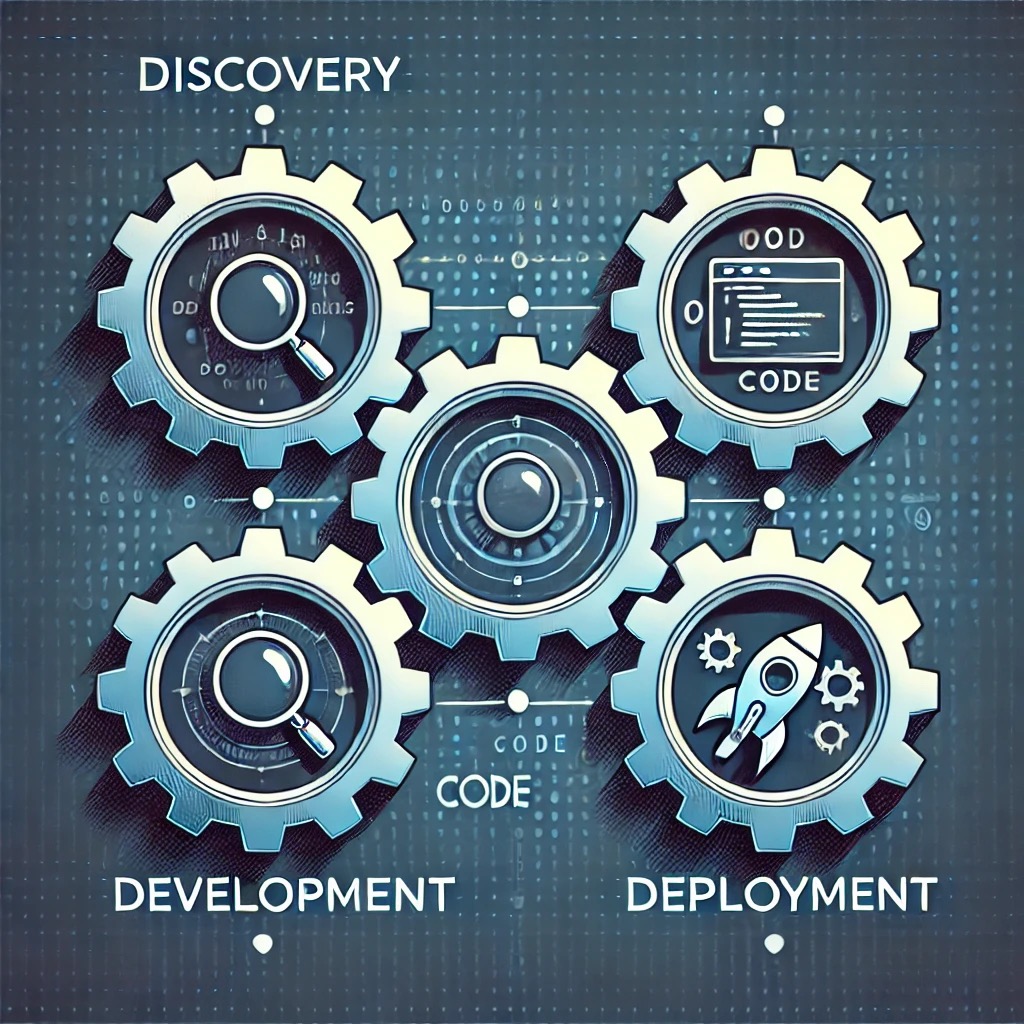
If you are a DevOps expert or a Cloud Architect looking to broaden your skills, you’re in for an insightful journey. We’ll explore the three essential phases that bring a machine-learning project to life: Discovery, Development, and Deployment. 

The big picture of our ML journey

Imagine you are building a rocket to Mars. You wouldn’t just throw some parts together and hope for the best, right? The same goes for machine learning projects. We have three main stages: Discovery, Development, and Deployment. Think of them as our planning, building, and launching phases. Each phase is crucial; they all work together to create a successful project.

Phase 1: Discovery – where ideas take flight

Picture yourself as an explorer standing at the edge of an unknown territory. What questions would you ask first? What are the risks, and where might you find the most valuable clues? This is what the Discovery phase is like. It is where we determine our goals and assess whether machine learning is the right tool for the task.

First, we need to define our problem clearly. Are we trying to predict stock prices? Identify different cat breeds from photos? Why is this problem important, and how will solving it make a difference? Whatever the goal, we need to be clear about it, just like an explorer deciding exactly what treasure they are searching for.

Next, we need to understand who will use our solution. Are they tech-savvy teenagers or busy executives? What do they need, and how can our solution make their lives easier? This understanding shapes our solution to fit the needs of the people who will use it. Imagine trying to design a rocket without knowing who will fly it, it could turn into a very uncomfortable trip!

Then comes the reality check: can machine learning solve our problem? Is this the right tool, or are we overcomplicating things? Could there be a simpler, more effective way? It’s like asking if a hammer is the right tool to hang a picture. Sometimes it is, but sometimes another tool is better. We need to be honest with ourselves. If a simpler solution works better, we should use it.

If machine learning seems like the right fit, it is time to gather high-quality data from which our model can learn. Think of it as finding nutritious food for the brain, the better the quality, the smarter our model becomes.

Finally, we choose our tools, the right architecture, and the algorithm to power our model. It is like picking the perfect spaceship for our mission to Mars: different designs for different needs.

Phase 2: Development – building our ML masterpiece

Welcome to the workshop! This is where we roll up our sleeves and start building. It is messy, it is iterative, but isn’t that part of the fun? Why do we love this process despite all its twists and turns?

First, let’s talk about data pipelines. Imagine a series of conveyor belts in a factory, smoothly transporting our data from one stage to another. These pipelines keep our data flowing smoothly, just like a well-oiled machine.

Next, we move on to feature engineering, where we turn our raw data into something our model can understand. Think of it as cooking a gourmet meal: we take raw ingredients (data), clean them up, and transform them into something our model can use. Sometimes, this means combining data in new ways to make it more informative, like adding a dash of salt to bring out the flavor in a dish.

The main event is building and training our model. This is where the real magic happens. We feed our model data, and it starts recognizing patterns and making predictions. It is like teaching a child to ride a bike: there is a lot of falling at first, but with each attempt, they get better. And why do they improve? Because every mistake teaches them something new. Training a model is just as iterative, it learns a little more with each pass.

But we are not done yet. We need to test our model to see how well it is performing. How do we know if it is ready? It is like a dress rehearsal before the big show, everything has to be just right. If things do not look quite right, we go back, tweak some settings, add more data, or try a different approach. This process of adjusting and improving is crucial, it is how we go from a rough draft to something polished and ready for the real world.

Phase 3: Deployment – launching our ML rocket

Alright, our model looks great in the lab. But can it perform in the real world? That is what the Deployment phase is all about.

First, we need to plan our launch. Where will our model live? What tools will serve it to users? How many servers do we need to keep things running smoothly? It is like planning a space mission, every tiny detail matters, and we want to make sure everything goes off without a hitch.

Once we are live, the real challenge begins. We become mission control, monitoring our model to make sure it is working as expected. We are on the lookout for “drift”, which is when the world changes and our model does not keep up. What happens if we miss this? How do we make sure our model evolves with reality? Imagine if people suddenly started buying different products than before, our model would need to adapt to these new trends. If we spot drift, we need to retrain our model to keep it sharp and up-to-date.

Wrapping up our ML Odyssey

We have journeyed through the three phases of the ML lifecycle: Discovery, Development, and Deployment. Each phase is essential, each has its challenges, and each is incredibly interesting.

MLOps is not just about building cool models, it is about creating solutions that work in the real world, solutions that adapt and improve over time. It is about bridging the gap between the lab and practical application, and that is where the true adventure lies.

Whether you are a seasoned DevOps pro or a Cloud Architect looking to expand your knowledge, I hope this journey has inspired you to dive deeper into MLOps. It is a challenging ride, but what an adventure it is.

MLOps fundamentals. The secret sauce for successful machine learning

Imagine you’re a chef in a bustling restaurant kitchen. You’ve just created the most delicious recipe for chocolate soufflé. It’s perfect in your test kitchen, but you must consistently and efficiently serve it to hundreds of customers every night. That’s where things get tricky, right?

Well, welcome to the world of Machine Learning (ML). These days, ML is everywhere, spicing up how we solve problems across industries, from healthcare to finance to e-commerce. It’s like that chocolate soufflé recipe: powerful and transformative. But here’s the kicker: most ML models, like many experimental recipes, never make it to the “restaurant floor”, or in tech terms, into production.

Why? Because deploying, scaling, and maintaining ML models in real-world environments can be tougher than getting a soufflé to rise perfectly every time. That’s where MLOps comes in, it’s the secret ingredient that bridges the gap between ML model development and deployment.

What is MLOps, and why should you care?

MLOps, or Machine Learning Operations, is like the Gordon Ramsay of the ML world, it whips your ML processes into shape, ensuring your models aren’t just good in the test kitchen but also reliable and effective when serving real customers.

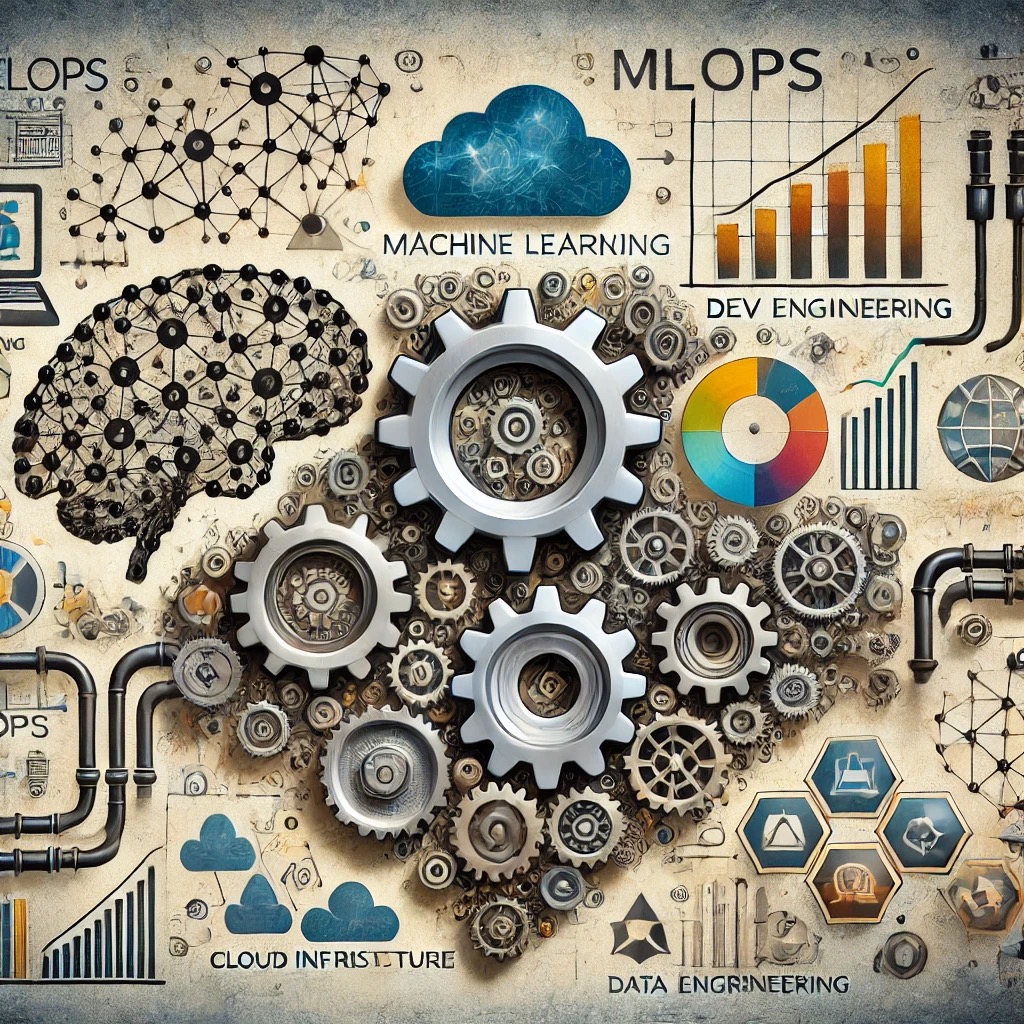
Think of MLOps as a blend of Machine Learning, DevOps, and Data Engineering, the set of practices that makes deploying and maintaining ML models in production possible and efficient. You can have the smartest data scientists (or chefs) developing top-notch models (or recipes), but without MLOps, those models could end up stuck on someone’s laptop (or in a dusty recipe book) or taking forever to make it to production (or onto the menu).

MLOps is crucial because it solves some of the biggest challenges in ML, like:

  1. Slow deployment cycles: Without MLOps, getting a model from development to production can be slower than teaching a cat to bark. With MLOps, it’s more like teaching a dog to sit—quick, efficient, and much less frustrating.
  2. Lack of reproducibility: Imagine trying to recreate last year’s award-winning soufflé, but you can’t remember which eggs you used or the exact oven temperature. Nightmare, right? MLOps addresses this by ensuring everything is versioned and trackable.
  3. Scaling problems: Making a soufflé for two is one thing; making it for a restaurant of 200 is another beast entirely. MLOps helps make this transition seamless in the ML world.
  4. Poor monitoring and maintenance: Models, like recipes, can go stale. Their performance can degrade as new data (or food trends) come in. MLOps helps you monitor, maintain, and “refresh the menu” as needed.

A real-world MLOps success story

Let me share a quick anecdote from my own experience. A few months back, I was working with a large e-commerce company (I won’t say its name). They had brilliant data scientists who had developed an impressive product recommendation model. In the lab, it was spot-on, like a soufflé that always rose perfectly.

But when we tried to deploy it, chaos ensued. The model that worked flawlessly on a data scientist’s ‘awesome NPU laptop’ crawled at a snail’s pace when hit with real-world data volumes. It was like watching a beautiful soufflé collapse in slow motion.

That’s when we implemented MLOps practices. We versioned everything, data, model, and configurations. We set up automated testing and deployment pipelines. We implemented robust monitoring.

The result? The deployment time dropped from weeks to hours. The model’s performance remained consistent in production. And the business saw a great increase in click-through rates on product recommendations. It was like turning a chaotic kitchen into a well-oiled machine that consistently served perfect soufflés to happy customers.

Key ingredients of MLOps

To understand MLOps better, let’s break it down into its main components:

  1. Version control: This is like keeping detailed notes of every iteration of your recipe. But in MLOps, it goes beyond just code, you need to version data, models, and training configurations too. Tools like Git for code and DVC (Data Version Control) help manage these aspects efficiently.
  2. Continuous Integration and Continuous Delivery (CI/CD): Imagine an automated system that tests your soufflé recipe, ensures it’s perfect, and then efficiently distributes it to all your restaurant chains. That’s what CI/CD does for ML models. Tools like Jenkins or GitLab CI can automate the process of building, testing, and deploying ML models, reducing manual steps and chances of human error.
  3. Model monitoring and management: The journey doesn’t end once your soufflé is on the menu. You need to keep track of customer feedback and adjust accordingly. In ML terms, tools like Prometheus for metrics or MLflow for model management can be very helpful here.
  4. Infrastructure as Code (IaC): This is like having a blueprint for your entire kitchen setup, so you can replicate it exactly in any new restaurant you open. In MLOps, managing infrastructure as code, using tools like Terraform or AWS CloudFormation helps ensure reproducibility and consistency across environments.

The sweet benefits of adopting MLOps

Why should you invest in MLOps? There are some very clear benefits:

  1. Faster time to market: MLOps speeds up the journey from model development to production. It’s like going from concept to menu item in record time.
  2. Increased efficiency and productivity: By automating workflows, your data scientists and ML engineers can spend less time managing deployments and more time innovating, just like chefs focusing on creating new recipes instead of washing dishes.
  3. Improved model accuracy and reliability: Continuous monitoring and retraining ensure that models keep performing well as new data comes in. It’s like constantly tweaking your recipe based on customer feedback.
  4. Reduced risk and cost: By implementing best practices for monitoring, logging, and retraining, MLOps helps reduce the risks of model failures and the costs associated with such incidents. It’s particularly effective in addressing model drift, where your model’s performance degrades over time as the real-world data changes. Think of it like having a sophisticated quality control system in your kitchen. Not only does it prevent immediate disasters (like a fallen soufflé), but it also detects when your recipes are slowly becoming less popular due to changing customer tastes. MLOps allows you to catch these issues early, adjust your models (or recipes), and maintain high performance over time. This proactive approach significantly reduces both the risk of serving “stale” predictions and the costs associated with major model overhauls.
  5. Better collaboration: MLOps helps bridge the gap between data scientists, DevOps, and other stakeholders, creating a more collaborative environment. It’s like getting your chefs, waitstaff, and management all on the same page.

Getting started with MLOps

If you’re new to MLOps, it’s a good idea to start small. Here are some practical tips:

  1. Start with a pilot project: Pick a model that’s not mission-critical and use it as a way to experiment with MLOps practices. It’s like testing a new recipe on a slow night before adding it to your regular menu.
  2. Focus on DevOps fundamentals: Make sure your team is comfortable with DevOps principles, like CI/CD and version control, as these are the foundation of MLOps.
  3. Choose the right tools: Not all tools will be suitable for your specific needs. Take the time to evaluate which ones fit best into your tech stack. It’s like choosing the right kitchen equipment for your specific cuisine. Here are some popular MLOps tools to consider:
    1. For experiment tracking: MLflow, Weights & Biases, or Neptune.ai
    2. For model versioning: DVC (Data Version Control) or Pachyderm
    3. For model deployment: TensorFlow Serving, TorchServe, or KFServing
    4. For pipeline orchestration: Apache Airflow, Kubeflow, or Argo Workflows
    5. For model monitoring: Prometheus with Grafana, or dedicated solutions like Fiddler AI
    6. For feature stores: Feast or Tecton
    7. For End-to-End MLOps platforms: Databricks MLflow, Google Cloud AI Platform, or AWS SageMaker

Remember, you don’t need to use all of these tools. Start with the ones that address your most pressing needs and integrate well with your existing infrastructure. As your MLOps practices mature, you can gradually incorporate more tools and processes.

  1. Invest in training: MLOps is a relatively new concept, and the tools are constantly evolving. Invest in training so your team can stay up to date. It’s like sending your chefs to culinary school to learn the latest techniques.

Frequently Asked Questions

Q: Is MLOps only for large organizations? A: Not at all, While large organizations might have more complex needs, MLOps practices can benefit ML projects of any size. It’s like how good kitchen management practices benefit both small cafes and large restaurant chains.

Q: How long does it take to implement MLOps? A: The time can vary depending on your organization’s size and current practices. However, you can start seeing benefits from implementing even basic MLOps practices within a few weeks to months.

Q: Do I need to hire new staff to implement MLOps? A: Not necessarily. While you might need some specialized skills, many MLOps practices can be learned by your existing team of DevOps. It’s more about adopting new methodologies than hiring a completely new team.

Wrapping Up

MLOps is more than just a buzzword, it’s the secret ingredient that makes ML work in the real world. By streamlining the entire ML lifecycle, from model development to production and beyond, MLOps enables businesses to truly leverage the power of machine learning.

Just like perfecting a soufflé recipe, mastering MLOps takes time and practice. But with patience and persistence, you’ll be serving up successful ML models that delight your “customers” time and time again.